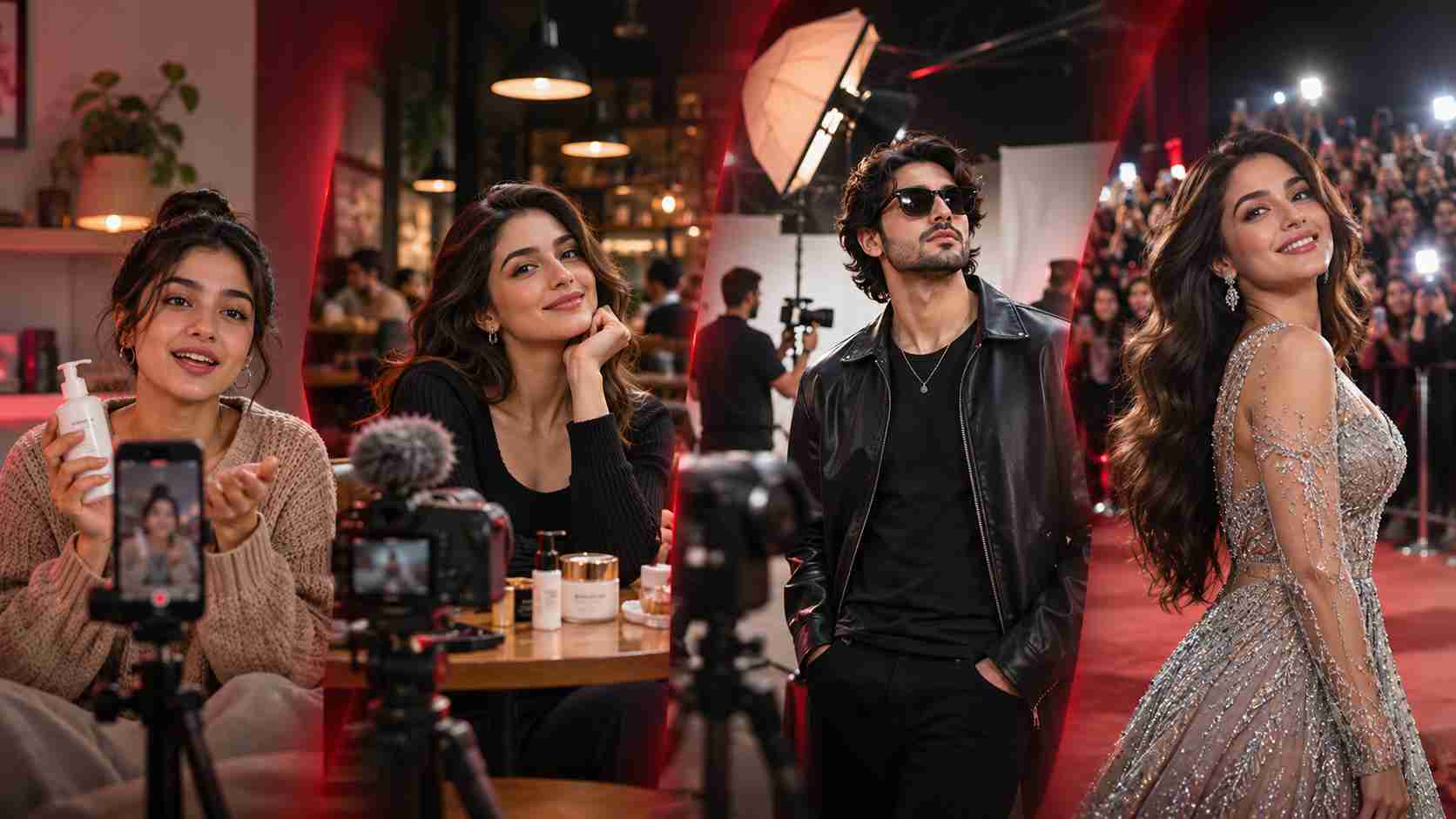
Ask ten brand managers what an influencer is and you’ll get ten answers. One will picture a film star with 50 million followers. Another will picture a home baker with 4,000 followers whose cake picks sell out by lunch.
In this article10 min read · 11 sections
- What are the 4 types of influencers?
- What is a nano influencer?
- What is a micro influencer?
- Who are mid-tier influencers?
- What is a macro influencer?
- What is a mega influencer?
- Do bigger influencers really get less engagement?
- What other types of influencers are there?
- How do you choose the right influencer tier for your brand?
- FAQs about types of influencers
- So, which types of influencers should you work with?
Both are right. They’re just different types of influencers, doing very different jobs.
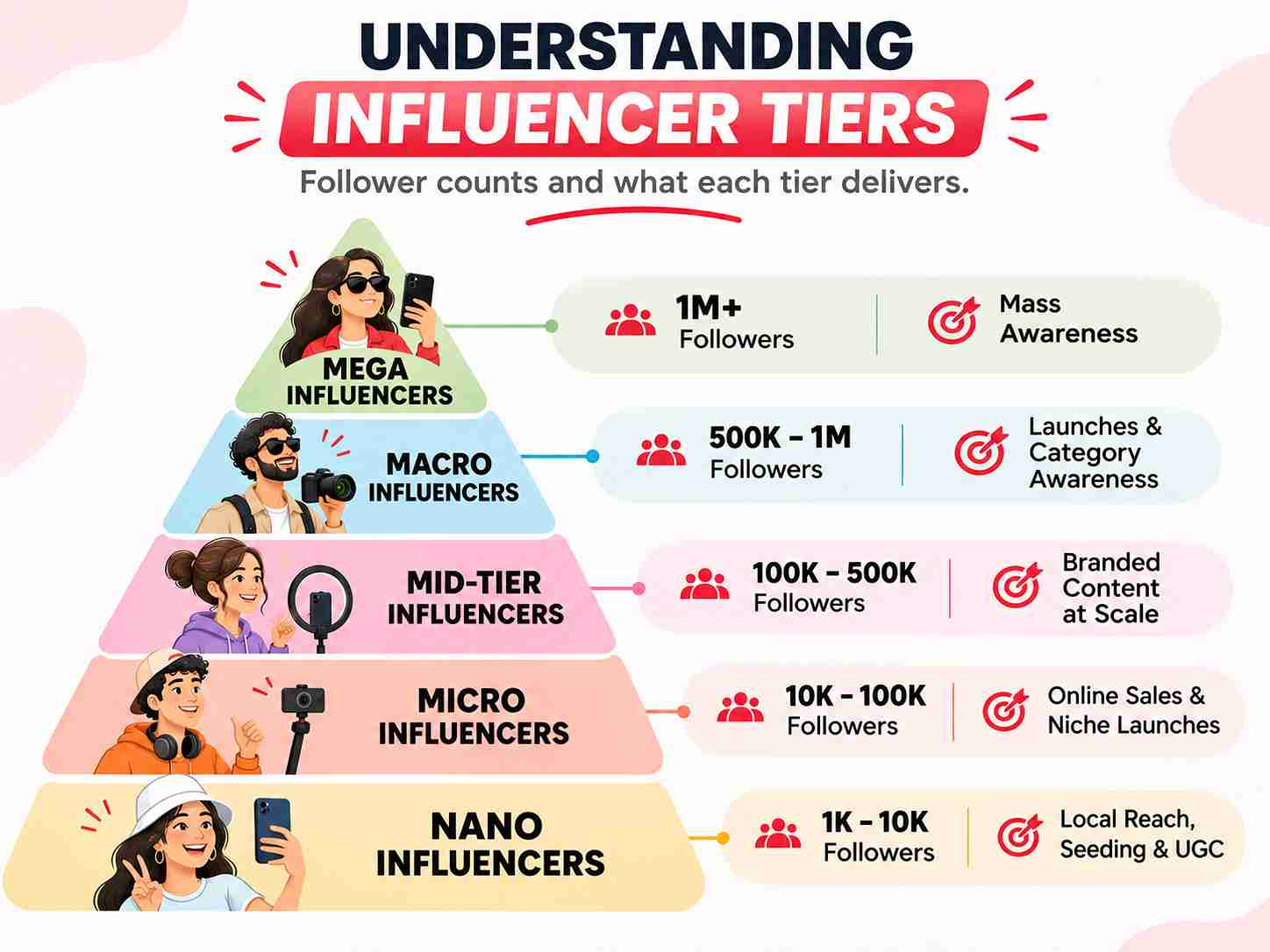
Most marketers sort the types of influencers by follower count: nano, micro, macro and mega, with a mid-tier group in between that many guides forget. Get the tier wrong and you either pay for reach you don’t need or end up with trust that never turns into sales.
Here’s how each tier works, what it typically costs in 2026 and how we pick creators for our own campaigns.
What are the 4 types of influencers?
The 4 classic influencer tiers are nano, micro, macro and mega. We add mid-tier as a fifth, because lumping a 120K creator in with a 480K one never made much sense to us.
Here’s how the five types of influencers compare, using Instagram Reel rates from Influee’s 2026 pricing guide:
| Tier | Followers | Rate per Instagram Reel | Best for |
| Nano | 1K to 10K | $50 to $300 | Local reach, seeding, UGC |
| Micro | 10K to 100K | $750 to $5,000 | Online sales, niche launches |
| Mid-tier | 100K to 500K | $2,500 to $15,000 | Branded content at scale |
| Macro | 500K to 1M | $10,000 to $50,000 | Launches, category awareness |
| Mega | 1M and up | $25,000 to $75,000+ | Mass awareness |
Take these numbers loosely. Nobody owns the follower bands and every rate card draws them a little differently. Prices also jump around inside a tier. Influee found that adding usage rights so you can run a creator’s content as an ad usually adds 20% to 50% and exclusivity can double the fee. Niche matters too: a finance creator will often charge two to three times more than a lifestyle creator with the same following.
What is a nano influencer?
A nano influencer has somewhere between 1,000 and 10,000 followers and usually isn’t a full-time creator at all. Think of the college student reviewing street food in her city, or the new mum telling her followers which baby products actually survived the first month.
Their followers are mostly people who know them, or who share one very specific interest. So when they recommend something, it lands like advice from a friend. They’re also the biggest group out there. HypeAuditor found that more than 63% of Instagram creators are nano influencers.
Every now and then, a small creator outsells a much bigger one on the same campaign. It nearly always comes down to how much their followers trust them.
Why brands love them
- People listen. Followers reply, ask questions and actually try the product.
- They’re affordable. Many will happily work for a product, a small fee or commission.
- They’re local. Perfect for a neighbourhood café, a local gym or a salon down the road.
The catch
- Each one reaches very few people, so you need a lot of them.
- Managing 40 creators is a part-time job in itself.
- Some are doing their first brand deal ever and it shows.
What is a micro influencer?
Micro influencers have 10,000 to 100,000 followers and people follow them for one thing. Skincare for oily skin. Budget travel. Money advice for your first job. A lot of them do this full time, or close to it.
For most of the brands we work with, this is the sweet spot. The audience still feels close, but the content is sharper and the creators know how a brief works.
What makes them work
- Trust in a niche. Their followers came for that one topic, so recommendations carry weight.
- They sell. Discount codes and affiliate links tend to do well here.
- They’re reachable. Most answer their own DMs, no manager needed.
Where it goes wrong
- Fake followers and engagement pods are common in this range. Check before you pay.
- Two creators with the same numbers can quote wildly different rates.
Something we’ve learned the hard way: at this tier, who follows matters more than how many. A creator with 40,000 followers in your city will usually beat one with 90,000 scattered everywhere.
Who are mid-tier influencers?
Mid-tier creators have 100,000 to 500,000 followers and, usually, years of practice. They can take a brief, shoot it properly and make a sponsored video feel like any other post. Honestly, for a growing brand this is often the most practical tier, which is why it’s odd that so many lists leave it out.
What makes them work
- Serious reach without celebrity fees. One of them can match several micro creators combined.
- Reliability. Deadlines get met. Revisions get done.
- Known in their niche. They’re often the go-to name in their category and some of that rubs off on you.
Where it goes wrong
- Many come with a manager, so expect slower deals and higher fees.
- Engagement starts slipping compared with smaller creators.
We usually bring mid-tier creators in once a product has proven itself with nano and micro campaigns.
What is a macro influencer?
Macro influencers sit between 500,000 and 1 million followers. They’re famous online even if your parents have never heard of them and most have a small team behind them: an editor, a manager, sometimes a crew.
What makes them work
- Reach, fast. One post can reach hundreds of thousands of people in a day.
- Polished content. Often good enough to reuse in your own ads, if the contract allows.
Where it goes wrong
- Costs and paperwork both climb quickly. Influee notes that one of the biggest price jumps happens right here, when creators move past mid-tier and agents start handling their deals.
- Their audience is broad, so less of it will match your customer.
- They post a lot of sponsored content and followers notice.
Macro influencer vs micro influencer: which one should you pick?
| Basis | Micro influencer | Macro influencer |
| Best at | Trust and sales | Reach and visibility |
| Use it for | Sales, sign ups, installs | Awareness, launches, buzz |
| Audience | Narrow and specific | Broad and mixed |
| Cost per creator | Lower | Much higher |
Our rule of thumb: if people already know what they want and need a nudge, go micro. If nobody has heard of you yet, go macro.
What is a mega influencer?
Mega influencers have over a million followers. That means film stars, athletes and musicians, plus creators who grew so big on YouTube, TikTok or Instagram that they became celebrities themselves.
What makes them work
- Massive reach. Few channels anywhere can match it.
- Instant recognition. Handy for a big launch or a seasonal push.
- Free press. A big name often gets written about beyond the post itself.
Where it goes wrong
- The price. Influee puts a single Reel from a mega creator at $25,000 to $75,000 or more and true A-list celebrities charge far beyond that.
- Low engagement per follower. Millions scroll past. Far fewer act.
- Controversy risk. If the star gets into trouble, your brand comes along for the ride.
Of all the types of influencers, this is the one you pick only when awareness is the goal and the budget is really there.
Do bigger influencers really get less engagement?
Everyone says engagement drops as follower counts rise. It does, but not quite the way most people think.
Here are the 2024 averages from HypeAuditor’s guide to influencer types:
| Tier | Instagram ER | TikTok ER |
| Nano | 1.73% | 10.3% |
| Micro | 0.68% | 8.7% |
| Mid-tier | 0.54% | 7.5% |
| Macro | 0.61% | 7.1% |
| Celebrity | 0.68% | 7.1% |
(HypeAuditor’s macro numbers come from an earlier report and it calls its top tier “celebrity.”)
Look at what happens after nano. On Instagram, micro, mid-tier, macro and celebrity accounts all sit between about 0.5% and 0.7%. So on that platform, moving from micro to macro barely changes engagement. It mostly changes the bill.
One more thing. These numbers shift depending on who’s measuring. Influee, for example, puts the average Instagram engagement rate for nano creators at 2.19%, a bit higher than HypeAuditor’s figure. That’s why we never hold a creator up against one universal benchmark. We compare them with others in their own niche, on the same platform.
What other types of influencers are there?
Follower count isn’t the only way to sort creators. When we build a shortlist, these matter just as much:
- Niche. Beauty, food, fitness, finance, parenting, gaming. If their niche has nothing to do with your product, their audience probably doesn’t either.
- Platform. Instagram is Reels and Stories, YouTube is longer reviews and LinkedIn creators reach the decision makers B2B brands want.
- Language and region. Creators who post in Spanish, Portuguese, Arabic, Hindi or other languages often have fiercely loyal audiences that English creators can’t touch. If your customers don’t mainly speak English, start here.
- Content style. Some creators teach, some entertain, some review. A detailed skincare explainer needs a very different person than a comedy skit.
- UGC creators. They make content for your brand’s own pages and ads. It never hits their feed, so follower count barely matters.
- Virtual influencers. Computer generated characters. Total control, but plenty of people struggle to connect with someone who isn’t real.
How do you choose the right influencer tier for your brand?
Start with the job you want done, not a follower number.
| If your main goal is… | Start with | Why |
| One city launch or footfall | Nano | Their followers live near you |
| Online sales and sign ups | Micro | Trust, plus sales you can track |
| Content for ads | Nano or UGC creators | Real looking content, cheaply |
| Scaling a product that already sells | Mid-tier | Reach from reliable pros |
| A national launch | Macro or mega | Attention, quickly |
In our experience, the best campaigns mix different types of influencers. One big name makes noise at launch, then a wave of micro and nano creators keeps people talking and turns that noise into orders.
If the budget is tight, spreading it usually beats betting it all on one name. Influee ran the numbers on a $10,000 budget: one macro creator at 0.8% engagement delivered about 6,400 engagements, while ten micro creators at 3% delivered around 12,000. That’s nearly double the engagement, plus ten pieces of content instead of one.
How we pick creators at Mystoria
- Goal and budget first. Those two decide the tier mix before we open a single profile.
- Audience over followers. We ask for audience insight screenshots: city, age, gender.
- Read the comments. Real conversations beat a wall of fire emojis.
- Check the growth curve. Thousands of followers overnight usually means bought ones.
- Look at old brand posts. Did they feel natural? Did anyone care?
- Test small. A handful of nano and micro creators first, then more money behind whoever actually drives sales.
Whatever tier you choose, make sure every paid post is clearly labelled. In the US, the FTC’s guide for influencers says creators must disclose any financial or personal relationship with a brand and that includes free products. The UK, India and most other big markets have similar rules.
FAQs about types of influencers
How many types of influencers are there?
If you go by follower count, there are four main types of influencers: nano, micro, macro and mega. We like to add mid-tier as a fifth, since a creator with 150K followers works very differently from one with 900K. You can also sort creators by niche, platform or the language they post in.
Which type of influencer is best for a small business?
Nano and micro creators, almost every time. They don’t cost much, their followers actually listen to them and you can try a few without risking your whole budget. Once you know what works, you can spend more.
How much do influencers charge?
It depends a lot on the creator, but Influee’s 2026 figures give a rough idea. A Reel from a nano creator costs about $50 to $300 and from a micro creator $750 to $5,000. At the top end, mega creators can charge $25,000 to $75,000 or more.
So, which types of influencers should you work with?
There’s no single right answer. Nano and micro creators win on trust and sales, mid-tier helps you scale and macro and mega buy attention. The brands that get the most out of the different types of influencers match the tier to the goal and usually mix a few.
Not sure where to start? Pick one goal, choose the tier that fits it and test with a small group of creators first. The results will tell you where to put the rest of your budget.